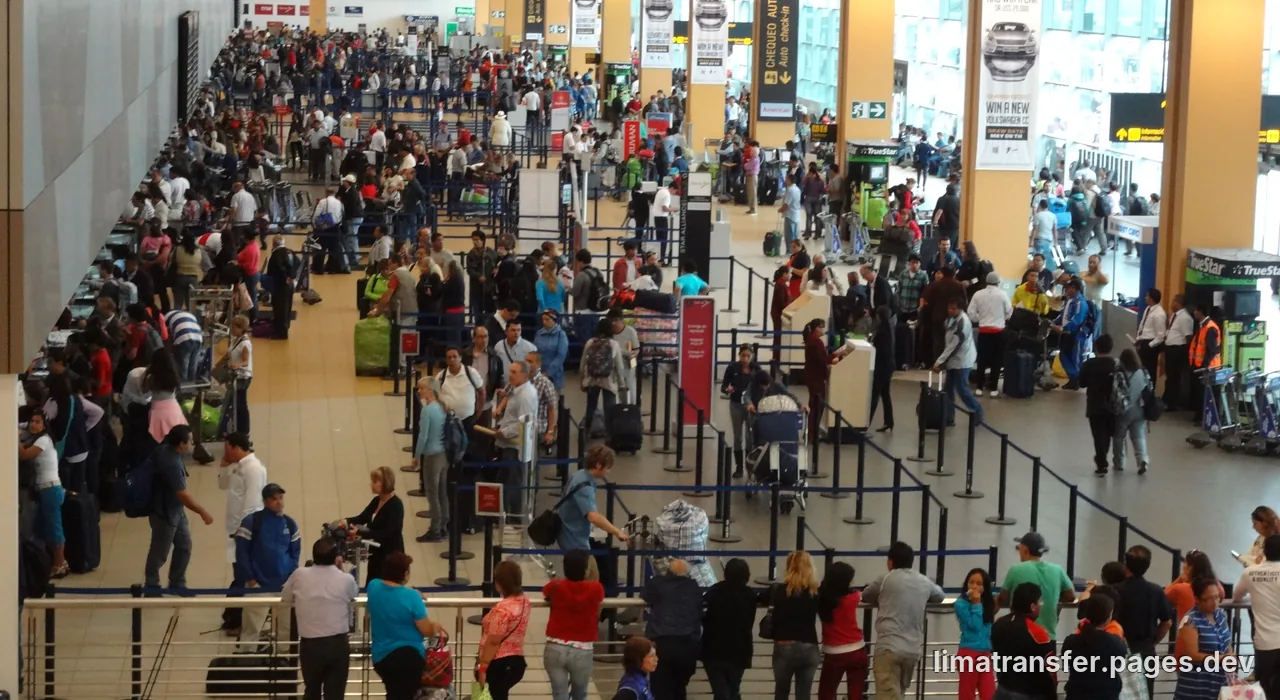
Why the new terminal matters for your trip
Lima’s new Jorge Chávez International Airport terminal opened on 1 June 2025 and reshaped the passenger flow for every visitor to Peru. The old terminal, in continuous use since the 1960s with a major 2000s renovation, had reached capacity at roughly 20 million annual passengers. The new building was designed for 30 million with headroom to 40 million. The expansion is visible the moment you step inside — wider corridors, dramatically more retail space, longer walking distances between gates, and a substantially larger arrivals hall that absorbed most of the old terminal’s chronic crowding.
For travelers, the most consequential change is not the size — it is the location. The new terminal sits about 1 kilometer west of the old building, on land that was previously airfield perimeter. That added kilometer translates into 15–20 minutes of additional drive time to every Lima destination east of the airport, which is essentially every destination travelers care about. If your last trip predates the new terminal, plan accordingly.
What is materially different at the new terminal
Three changes shape the practical experience.
The arrivals hall is much larger. The old terminal’s arrivals corridor became a notorious choke point — tight, loud, and crowded with drivers soliciting passengers. The new building’s arrivals hall is roughly three times the floor area, with high ceilings, more natural light, and a clearer separation between baggage claim, customs, and the public greeting area. The change does not eliminate the unlicensed taxi solicitation problem, but it noticeably reduces the pressure.
Transfer pickup zones are physically separated. Pre-booked private transfer drivers wait inside the upper arrivals hall with name placards. The official airport taxi counter is at the right side of the arrivals hall, just before the curb doors. The rideshare pickup zone for Uber and Cabify is across a covered pedestrian bridge, on the opposite side of the parking structure — a 4-minute walk from arrivals. The bridge protects you from rain but the distance is meaningful with heavy luggage.
Departures uses a new four-level layout. Check-in occupies an expanded ground level with substantially more counter capacity. Security screening sits on the same level. Immigration for international departures is on the level above, with a long pedestrian corridor that funnels passengers toward the international gates. Domestic gates are clustered separately. The walking distances are longer than the old terminal — budget an extra 10 minutes between security and gate, especially at the international international far end.
Arrival flow walkthrough
If you are landing at the new terminal for the first time, the path from aircraft door to outside curb takes 30–60 minutes depending on flight load and immigration queue.
- Disembark and walk to immigration. Long-haul flights from Europe and North America typically use the eastern half of the international gates, putting immigration about a 4–6 minute walk away. Latin American flights tend to use the western gates, closer to immigration.
- Clear immigration. Most nationalities no longer fill out paper arrival cards. The immigration officer scans your passport, asks one or two questions about purpose and length of stay, and stamps you in. Expect 20–40 minutes through the queue during morning peaks (10 AM–noon), 5–15 minutes off-peak.
- Collect baggage at the new carousel hall. The hall has twelve carousels arranged in two rows. Your flight’s carousel is displayed on overhead boards. Bags typically appear within 15–25 minutes of landing — slightly slower than the old terminal during the first months but stabilizing as ground crew acclimate to the new layout.
- Walk through customs. Customs uses a green/red channel system. Most tourists take the green channel and walk through without inspection. Random spot checks occur but are uncommon for visitor traffic.
- Enter the arrivals hall. This is the large public greeting area. Pre-booked drivers wait here with name placards. Look for your driver in the roped meet-and-greet zone before moving toward the curb doors.
- Choose your transfer path. Pre-booked transfer: confirm the driver and follow them to the curb. Airport taxi: walk to the counter on the right, book at the desk, then proceed to the curb. Rideshare: exit through the main doors, follow signage for Transporte por aplicación, and walk across the pedestrian bridge to the rideshare waiting zone.
The transition from “arrived in Lima” to “in the vehicle heading to your hotel” takes 5–15 minutes once you are in the arrivals hall, with the rideshare path running longest because of the pedestrian bridge walk.
Where pre-booked transfer drivers wait
Pre-booked drivers cannot enter customs, baggage claim, or any restricted area. They wait in the arrivals hall, just outside the customs exit, in a clearly marked meet-and-greet zone. The zone has a permanent rope barrier on three sides with a single passenger exit point. Drivers stand on the inside of the barrier holding placards in 20–30 cm letters with the passenger name.
The most common first-time mistake is exiting the arrivals hall before finding the driver. Drivers do not stand outside in the curb area; they stand inside, in the meet-and-greet zone. If you walk straight through the arrivals hall without scanning the placards, you will pass the driver. The signage in the hall points back to the zone for travelers who exit too quickly, but it is easier to look for your driver before crossing the curb doors.
If your driver is not in the zone at expected arrival time, the operator’s dispatch can be reached by WhatsApp through the contact number on your booking confirmation. Most operators have a 5-minute response time to dispatch updates. Local operators including LimaTransfer staff a 24-hour WhatsApp desk for arrival-day issues.
Rideshare pickup zone specifics
The rideshare zone is the most operationally specific area of the new terminal. Uber and Cabify drivers are not permitted to pick up at the main arrivals curb. They wait in a designated zone on the opposite side of the parking deck, reached by a covered pedestrian bridge that connects the second level of the arrivals hall to the rideshare staging area.
From the moment you exit the arrivals hall, the rideshare walk takes about 4 minutes if you are unburdened, longer with multiple suitcases. The bridge is well-signposted and lit. Once at the staging area, request your ride through the app, confirm the driver’s license plate against the app display before approaching the vehicle, and verify the driver’s name. Lima has occasional reports of unlicensed drivers staging in the rideshare zone and offering rides to anyone who looks tentative — the app verification protects against this.
Surge pricing applies based on overall demand. Between 11 PM and 4 AM the surge multiplier can push a $20 USD daytime Miraflores trip past $40 USD. For travelers who dislike that variance, a pre-booked private transfer locks the rate.
Departures flow at the new terminal
Departing passengers enter at the ground level. Check-in counters are arranged in clusters by airline alliance, with overhead boards listing the cluster numbers for each flight. International check-in cutoff is typically 60 minutes before departure for most airlines; long-haul carriers occasionally extend to 75 minutes.
After check-in, security screening occupies the same level. Lines are usually shorter than the old terminal because the new building has more screening lanes operating in parallel. Once through security, international passengers proceed upstairs to immigration; domestic passengers stay on the same level and route to their gates.
The retail concourse between security and gates is substantially larger than the old terminal. Expect duty-free shops, a longer food court, several pisco bars, and a small Peruvian crafts and souvenir cluster. Walking distance from security to the farthest international gate is roughly 12 minutes at a normal pace. Budget extra time if you are connecting from a domestic flight to an international one — the inter-gate walks are longer than the old terminal’s.
Connections to the city — what changed
Three transfer realities shifted with the terminal move.
Drive times grew. The 15–20 minute additional drive time applies to every Lima city destination east of the airport. Miraflores transfers that ran 30–45 minutes before now consistently run 45–75. San Isidro and Barranco saw similar increases. Centro Histórico and Callao cruise port saw smaller increases because their distance from the airport is shorter and the change is proportionally less.
Costa Verde routing remains preferred. Drivers continue to default to the Costa Verde coastal highway for southbound trips (Miraflores, Barranco). The route is unchanged from the old terminal era; only the initial airport-to-Avenida-Faucett leg is slightly longer.
Bus and shuttle services adapted. The Airport Express Bus relocated its boarding zone to a new pickup point at the new terminal. Shared shuttles operated by Taxi Green and Airport Express adjusted their dispatch schedules. Frequencies are roughly equivalent to pre-2025 levels but the per-trip drive times grew proportionally.
Practical tips and known annoyances
Three first-month annoyances persist and are worth knowing.
Wayfinding for first-time visitors. The new terminal’s size makes initial navigation harder than the old building. Overhead signage is clear once you spot it, but the high ceilings and large floor area can feel overwhelming on a first arrival. Allow extra mental bandwidth for the first 10 minutes inside the arrivals hall.
ATM placement. The most accessible ATMs are inside the arrivals hall after customs, not before. Card-paying travelers will not need cash; passengers planning to pay cash for an airport taxi should withdraw at the post-customs ATMs rather than waiting until the curb.
SIM card kiosks. Lima airport has prepaid SIM kiosks in both the arrivals hall and the international departures concourse. Bitel, Movistar, and Claro all operate kiosks. Prices are competitive with city center but the airport kiosks accept card payment, which is convenient. Booking your local SIM at the airport before leaving for your hotel is the cleanest workflow.
What the new terminal does well
Despite the longer drive times, the new building meaningfully improves several arrival-day pain points that defined the old terminal. The expanded baggage claim halls process flights in parallel rather than queuing, which shortens the wait for checked bags during peak periods. The customs and immigration corridors run wider, with more lanes and clearer signage. Restrooms are abundant and modern. The arrivals hall has integrated seating for travelers waiting on companions, which the old building lacked.
The retail and dining concourse on the departures side substantially upgrades pre-flight options. Several Peruvian restaurant brands have outlets in the departures food court, including pisco bars that pour the spirit at near-bodega prices. Duty-free coverage expanded into a much larger footprint with substantially better Peruvian-specific selections — pisco, chocolate, alpaca textiles, and Peruvian coffee. Long international layovers (4+ hours) are now genuinely tolerable in a way the old terminal made difficult.
Wi-Fi coverage runs throughout both arrivals and departures. The network is free, capped at 60 minutes per session, and works well enough for messaging and basic browsing. For pre-booked transfer passengers, the 60 minutes is enough to confirm driver details and update arrival ETAs without using cellular data.
Closing notes
The new Jorge Chávez terminal is a substantial operational upgrade over the old building, with the trade-off of meaningfully longer drive times to every Lima city destination. Pre-booked private transfers remain the cleanest way to bridge the airport-to-hotel handoff for first-time visitors, especially given the larger arrivals hall and the unfamiliar pedestrian bridge layout for rideshare pickup. The destination and service pages on this guide cover the per-corridor economics in detail; the arrivals step-by-step guide covers the inside-the-terminal flow at finer granularity.