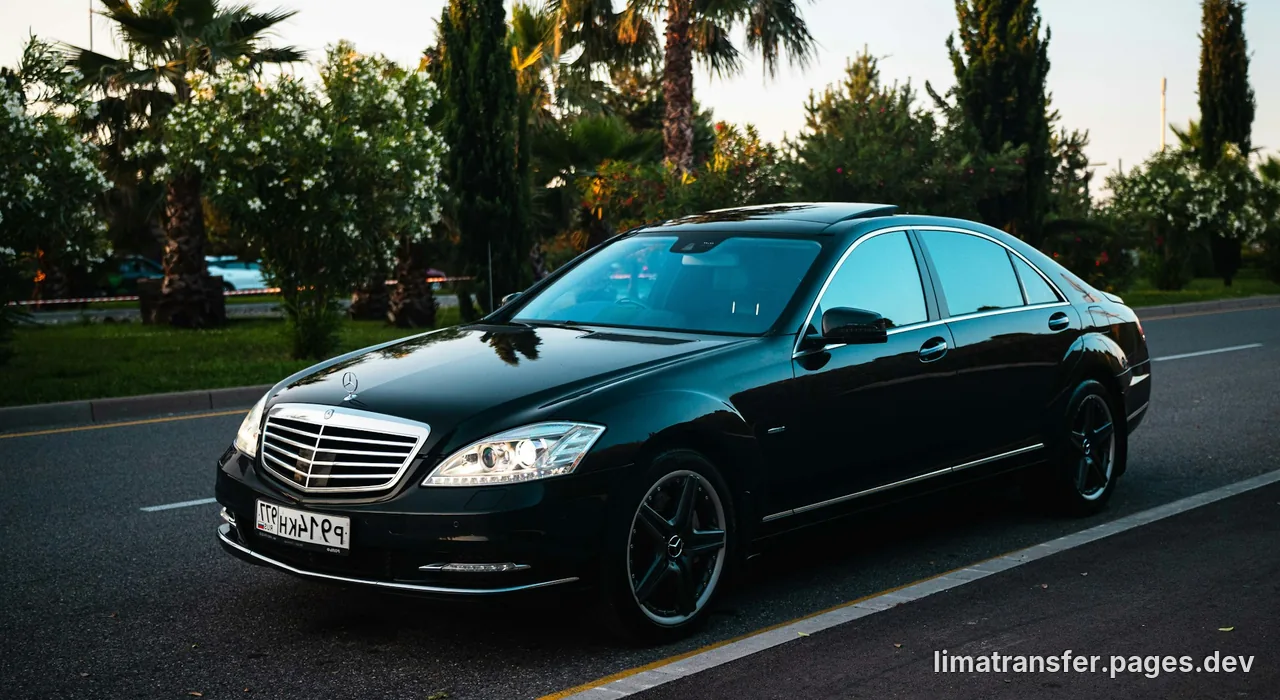
What “private car” actually means in Lima
A private car transfer in Lima is a pre-booked sedan with a named driver, dispatched from the operator’s fleet about 90 minutes before your flight is due to land. The driver receives your flight number, monitors arrival time, and waits at the meet-and-greet point inside the terminal with a placard bearing your name. The price is agreed at booking and does not move regardless of traffic, delay, or surge. This is the most popular service category for first-time visitors and the default for business travel.
It is distinct from the airport taxi counter (which dispatches whichever sedan is next in the rank, with the price set at the counter) and from rideshare apps (which match you to whoever happens to be in the app pickup zone, with dynamic pricing). The private car layer sits one tier above both, with a marginal price premium and a meaningful reliability premium.
How private car pricing works in 2026
Operator pricing is mileage-based with a fixed booking fee. Most Lima operators publish per-destination flat rates that cover the round-trip economics from their dispatch base — usually somewhere in eastern Callao or western San Isidro — to the named destination. The result is the bands you see on this page: $18 USD for the shortest hop to Callao cruise port, up to $32 USD for a Barranco drop. Card payment is the default and runs through Visa, Mastercard, and most international debit cards. Corporate billing is available with several local operators including LimaTransfer, which simplifies expense reporting for repeat business travelers.
Surcharges are limited and predictable. Late-night service between 11 PM and 5 AM adds $3–$5 USD with some operators (others do not surcharge at all). Cruise port drop-off occasionally adds $3–$5 for the gate paperwork; this should be quoted at booking. Cancellation fees apply if you change your booking within 24 hours of pickup — typically 30–50% of the fare. Compare these against rideshare surge pricing, which can push a $22 USD daytime Miraflores trip past $40 USD at 2 AM on a Saturday.
When the private car is the right choice
Four scenarios push toward private car: late or pre-dawn arrivals, business trips with same-day meetings, families or groups of three with full luggage, and first visits to Lima where the arrivals-area scams are an unknown. The pre-booked sedan removes the variables that cause the most first-trip friction. Daytime solo travelers with light bags often choose rideshare instead and save $5–$10 USD; that is also a reasonable call. The boundary is roughly where the marginal cost of certainty exceeds the value you place on certainty.
For group travel, the breakpoint is three passengers with luggage. At three or more, the private sedan starts to feel cramped, and the SUV or minivan tier becomes the right choice. For two adults with shared luggage, a single sedan is usually optimal. The minivan tier compounds savings beyond four passengers.
Booking workflow that actually works
Book 24–72 hours ahead through the operator’s site or via WhatsApp. Provide flight number, destination address with hotel name and landmark, and passenger count. Confirmation arrives within an hour and includes the driver’s name and plate once dispatch is set (6–12 hours before landing). Same-day bookings work but lose the buffer that makes flight tracking useful.
After landing, walk through immigration at normal pace, then look for your driver in the meet-and-greet area inside arrivals. Verify the placard against your booking. Pre-booked drivers do not solicit; if someone approaches asking if you need a transfer, they are not your driver. Move to the curb, load luggage with the driver, and the trip begins.
Aggregator vs local operator
Two booking layers exist. Local operators dispatch their own fleet directly; aggregators (Kiwitaxi, Intui Travel, GetTransfer) consolidate operators behind a single booking interface with a markup of 15–25% over the underlying rate.
Aggregator value is single-checkout convenience across geographies. Local operator value is direct dispatch quality, corporate billing, and pricing that undercuts the aggregator layer. For repeat travelers, settling on one local operator wins on cost and reliability over five to ten trips.
Service standard you should expect
A reasonable Lima private car operator delivers: vehicle no older than 5 years, driver with operator-issued ID and airport route experience, English proficient enough to confirm your hotel, child car seat on request (24-hour lead time), and a PDF receipt within 1–2 hours of trip completion. Premium operators add water bottles, USB charging, and 24-hour dispatch WhatsApp support.
Operators below this bar exist — usually under aggregator white-label arrangements. Reviews are the easiest filter: any operator with recent complaints about late drivers or surprise fees should be skipped. Check current rates through the LimaTransfer booking flow as a reference for the local-operator tier.
Closing notes
The Lima airport private car service is the highest-volume category in the city’s transfer market for good reason — it solves most of what travelers actually worry about. The $5–$10 USD premium over rideshare buys flight tracking, fixed pricing, and a meet-and-greet inside the terminal. For tight-schedule arrivals the math is straightforward; relaxed daytime solo trips can still default to rideshare.