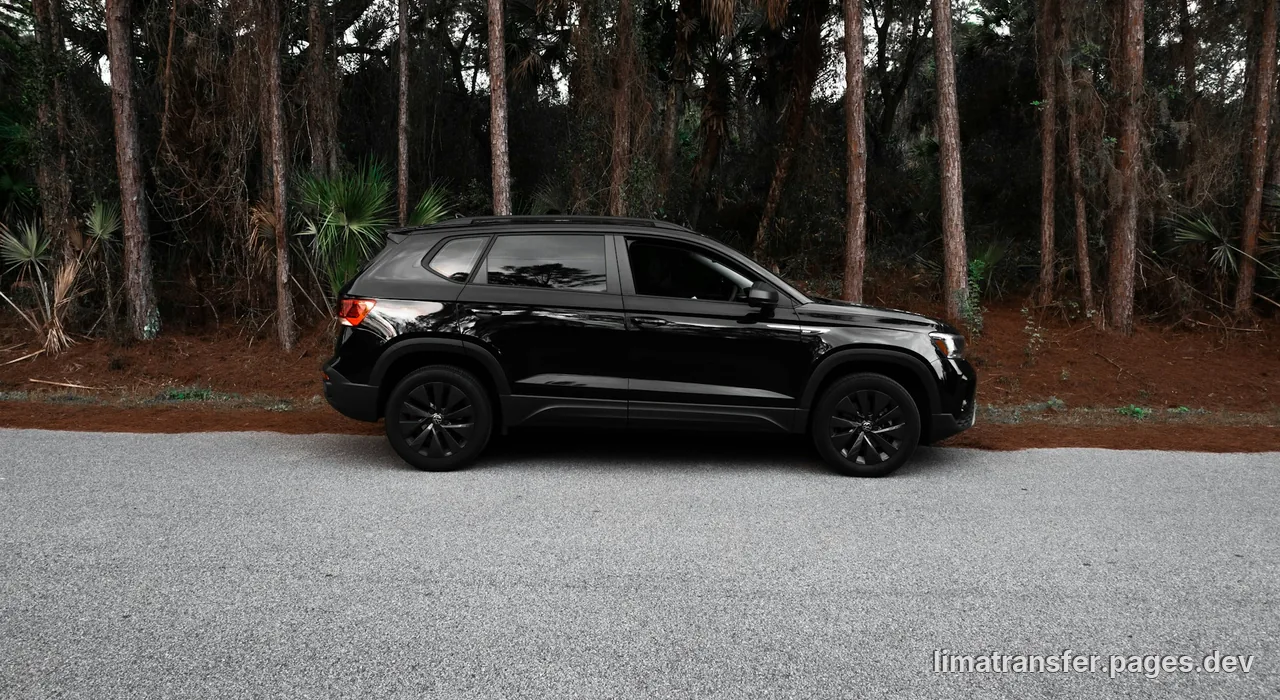
When the SUV upgrade makes sense
The SUV tier is one notch above the standard private sedan in Lima’s transfer market. It buys you extra luggage capacity, more cabin room, and a slightly elevated ride quality that matters after a long-haul flight from the US or Europe. Three traveler profiles consistently pick it: families with checked luggage, business travelers who want premium ride comfort, and pairs traveling with bulky sports gear like golf clubs or surfboards.
The economics are straightforward. The SUV runs $10–$15 USD above the equivalent sedan trip — $35–$55 for Miraflores versus $22–$32 for the same drop in a sedan. For one or two passengers with carry-on luggage, the premium is unjustified; the standard sedan is more comfortable than people expect and handles light luggage without compromise. For three or four passengers, the SUV tier becomes the right call, and for groups of four with full luggage it is effectively required.
What you actually get for the upgrade
A standard Lima airport SUV is a mid-size vehicle — Toyota Fortuner, Hyundai Tucson, Hyundai Santa Fe, or Toyota RAV4 are the dominant models. The trunk volume is roughly 50% larger than the sedan tier, the rear seat fits three adults comfortably (versus the sedan’s tight three-across), and the higher seating position makes entry easier for older travelers or anyone with mobility concerns.
Beyond capacity, the SUV ride feels meaningfully different over Lima’s coastal highway. The Costa Verde freeway has some rough patches, especially near the Barranco approach, and the SUV’s longer wheelbase absorbs them with less cabin transfer. After a 12-hour flight from Madrid or Amsterdam, the difference matters more than the spec sheet suggests.
Service standards are identical to the private sedan tier: flight tracking, name placard at the meet-and-greet, fixed price, card payment by default, and PDF receipt within 1–2 hours of trip completion. Premium operators offering SUV service typically dispatch their newer fleet to this tier — vehicles under 3 years old, with newer interiors and reliable air conditioning, which matters more in Lima’s humid coastal climate than first-time visitors expect.
Booking timing and inventory
SUV inventory is thinner than sedan inventory across the Lima operator market. A given operator might run 15–20 sedans for every 3–5 SUVs in active rotation, so the booking buffer matters more. Book 48–72 hours ahead for confirmed SUV dispatch; 24-hour bookings work but you may get downgraded to “premium sedan” (a newer or larger sedan) if SUV inventory is fully committed.
Same-day WhatsApp bookings are possible but lose flight tracking and frequently come back as “best available,” which usually means a sedan with the same driver. For cruise arrivals, late-night flights, or family travel, the 48-hour booking window is safer. Visit limatransfer.com for a representative local-operator booking flow.
Aggregator vs local operator economics
The aggregator markup hits harder on the SUV tier than on the sedan tier because inventory is scarcer and platforms apply a higher margin to the limited capacity. A Miraflores SUV that runs $40 USD direct through a local operator typically lists at $55–$65 through aggregator platforms. Intui Travel is a reasonable reference point for the aggregator tier; the 30–50% spread to local operators is consistent.
For one-off bookings the aggregator convenience may justify the cost. For repeat travelers, especially business teams making multiple Lima trips per year, direct relationships with one or two local SUV operators consistently save $200–$400 USD over a year of bookings and improve dispatch reliability at the same time.
Closing notes
The Lima airport SUV transfer exists for specific traveler profiles: families with luggage, groups of three to four, and travelers who value ride comfort. For everyone else the sedan covers the same ground at $10–$15 USD less. The destination pages list per-route SUV pricing.